
ForceBeyond Logo
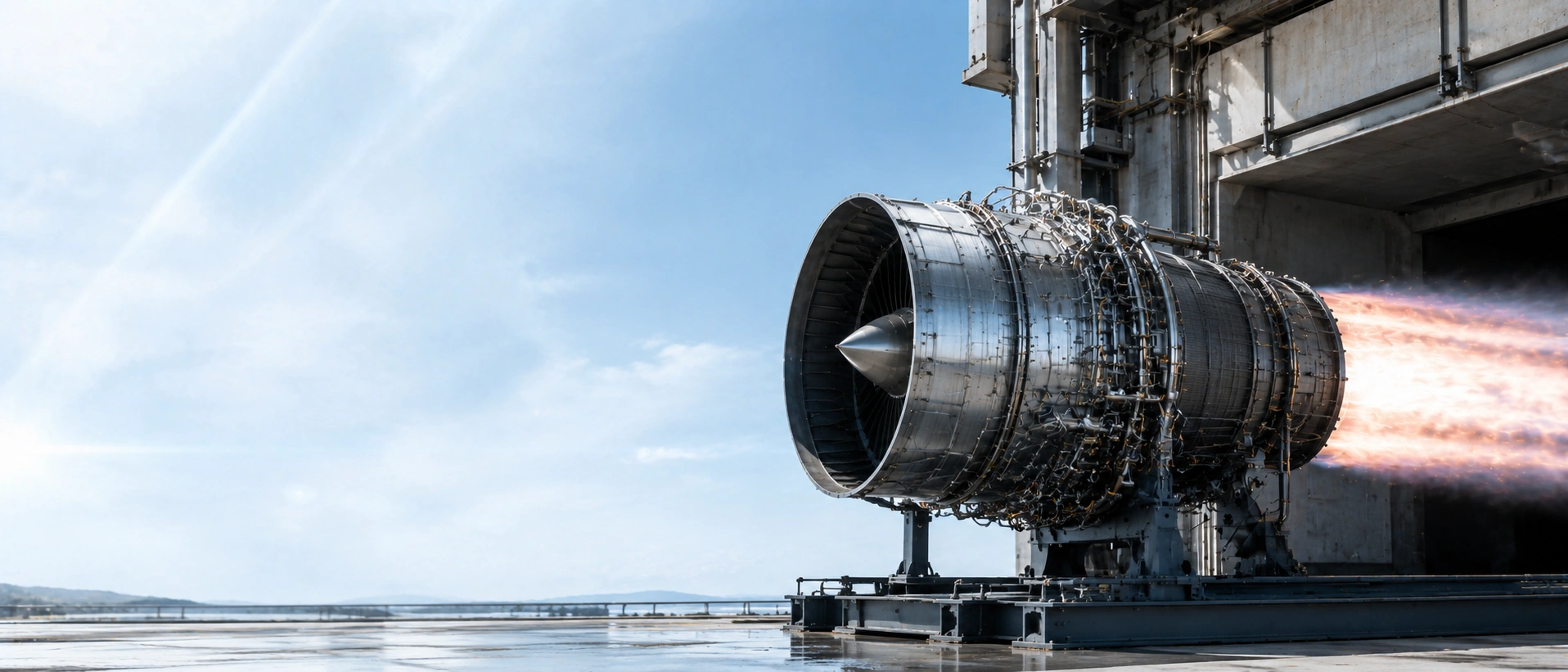
Titanium aerospace jet engine undergoing a high-performance ground test with active exhaust

Precision Forging Services: High-Strength, Defect-Free Manufacturing

Precision Forging Services: High-Strength, Defect-Free Manufacturing

ForceBeyond is a premier global supplier of high-precision forged components. By utilizing immense pressure to shape heated metal, our forging processes manipulate the internal grain structure of the alloy, delivering parts with unparalleled structural integrity, impact resistance, and fatigue life.

Operating under a strict ISO 9001:2015 quality management system, our dual-shore manufacturing network supplies mission-critical forged parts to the world’s most demanding sectors—including aerospace, power generation, oil and gas, and heavy automotive. From massive open-die steel blocks to near-net-shape aerospace titanium, we deliver fully machined, lot-traceable components ready for final assembly.

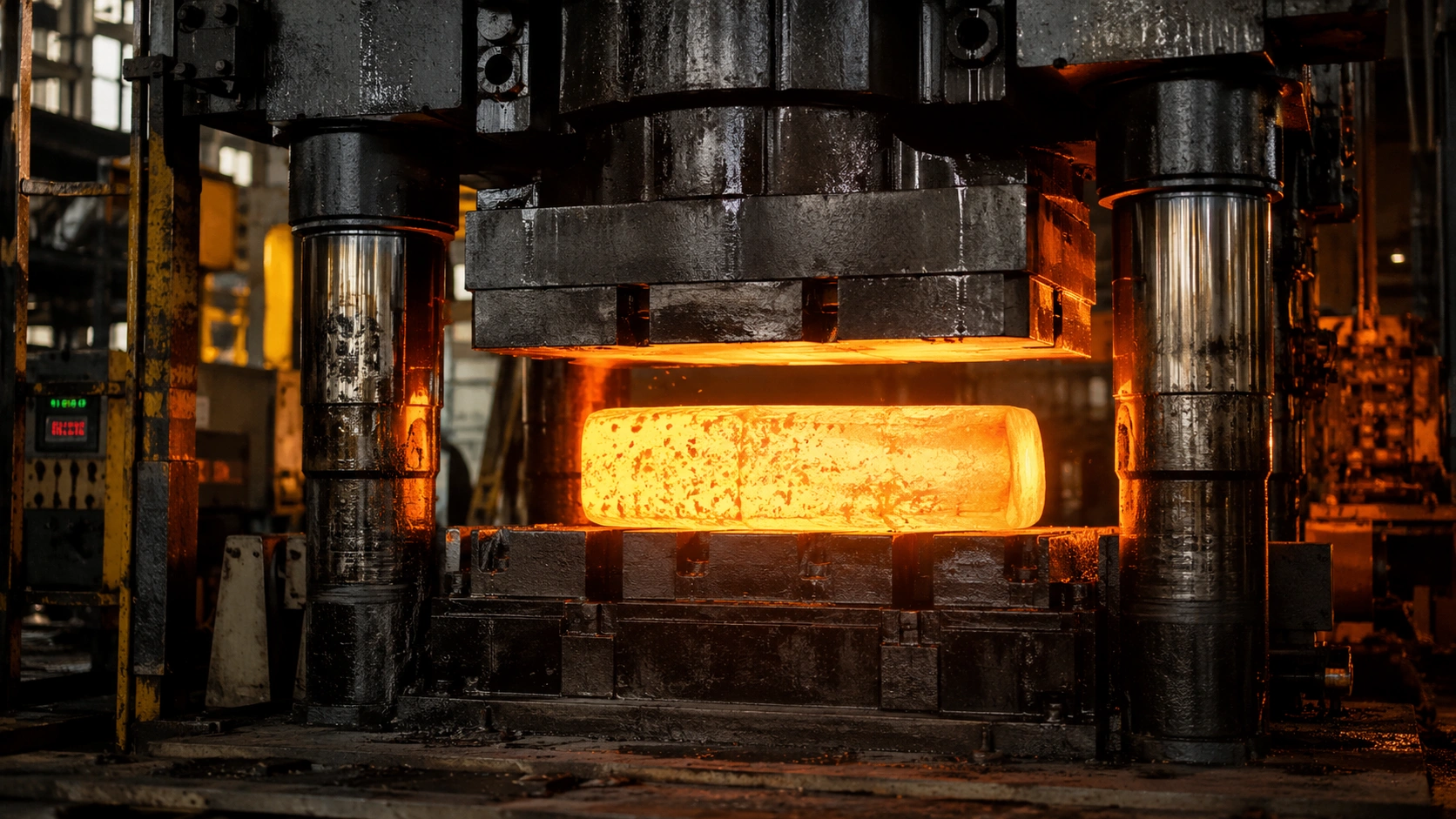
Hot metal billet positioned beneath a hydraulic forging press for precision shaping in an industrial forge.

Comprehensive Forging Capabilities

ForceBeyond offers a complete suite of forging processes, allowing us to match the exact dimensional, volume, and metallurgical requirements of your engineering prints.

  • Closed Die Forging:Ideal for high-volume production. Custom-engineered steel dies compress the metal into complex, near-net shapes, drastically reducing material waste and secondary machining time.
  • Open Die ForgingThe ultimate solution for massive, heavy-duty components. By hammering metal between flat dies without custom tooling, we achieve maximum structural density for massive shafts, cylinders, and blocks with rapid lead times.
  • Seamless Rolled Ring Forging:Essential for circular components like turbine casings and high-pressure flanges. The rolling mill imparts a circumferential grain flow that provides unmatched resistance to radial and tangential stress with zero weld seams.

Advanced Material Expertise: Superalloys & Titanium

While we forge all standard grades of carbon, alloy, and stainless steels, ForceBeyond specializes in high-performance metallurgy. Our advanced thermal control prevents grain coarsening and oxidation in highly reactive and heat-resistant metals.

Material Category Core Alloys Key Advantages & Applications
Titanium Forging Ti-6Al-4V (Grade 5) Exceptional strength-to-weight ratio. We specialize in Aerospace Titanium Forging and Near-Net-Shape Titanium to minimize expensive material waste.
Superalloy Forging Inconel 718, Inconel 625 Extreme heat and fatigue resistance. Critical for jet engine rotating parts, industrial gas turbines, and nuclear infrastructure.
Non-Ferrous ECO BRASS(C69300),Aluminum Lead-free, leak-proof density for fluid control and lightweight structural brackets for transportation.

The Metallurgical Advantage: Why Choose Forging?

When components are subjected to extreme pressure, rotational stress, or cyclic fatigue, cast or machined-from-billet parts carry inherent risks. Forging eliminates these vulnerabilities.

  • Optimized Grain Flow:Machining a part from a solid block cuts straight across the metal's natural grain. Forging physically moves and bends the grain to follow the exact contours of the component, dramatically increasing directional strength and impact resistance.
  • Zero Internal Porosity:The extreme pressures involved in the forging process compress the metal, eliminating the internal micro-shrinkage, voids, or gas pockets that frequently plague cast components.
  • Isotropic Response to Heat TreatmentA dense, refined, and uniform forged grain structure ensures that subsequent heat treatments (like quenching, tempering, or age hardening) penetrate evenly, yielding perfectly consistent mechanical properties across the entire part.

Tier-1.5 Integration: Forged-to-Machine Solutions

Forgings typically leave the press with a material allowance. ForceBeyond operates on a Tier-1.5 model, providing a seamless transition from the heavy forging press to our high-precision secondary operations.

By managing the entire value chain, we eliminate dimensional "hand-off" risks between separate forging and machining vendors.

  • High-Precision CNC Machining:100% immersion UT to verify internal structural integrity.
  • Advanced Thermal Processing:Solution annealing, age hardening, and stress relieving to lock in targeted tensile and yield strengths.
  • Rigorous NDT (Non-Destructive Testing):100% Ultrasonic Testing (UT) to guarantee internal integrity, alongside Magnetic Particle (MPI) and Fluorescent Penetrant Inspection (FPI).

Frequently Asked Questions: Forging Manufacturing

What is the difference between hot forging and cold forging?

Hot forging involves heating the metal above its recrystallization temperature before pressing, which prevents strain hardening and allows for massive deformation (ideal for steel, titanium, and superalloys). Cold forging shapes the metal at room temperature, which increases the metal's strength through strain hardening and provides excellent surface finishes, typically used for smaller, softer metal parts like fasteners.

Why does ForceBeyond emphasize 'Near-Net-Shape' forging for Titanium?

Titanium is highly expensive, and machining it is slow and tool-intensive. By designing closed dies that press the titanium extremely close to its final 'net shape', we drastically reduce the amount of raw material required and cut secondary CNC machining time by up to 70%.

Is forging more expensive than casting?

Forging generally has higher initial tooling and setup costs than sand casting. However, for mid-to-high-volume production runs—or for mission-critical parts where failure is not an option—forging is far more cost-effective due to its superior strength, lower rejection rates, and elimination of internal defects.

Request Quote For Forging

Sources

Our Internal Resources for Die Casting, Investment casting, Forging and Sand Casting