3D Process Library: Primary Forming & Secondary Processing
Select a manufacturing discipline below to view the step-by-step 3D technical animation, metallurgical benefits, and target component applications.
1. Vacuum Investment Casting (Lost-Wax Process)
Process Overview: A precision wax pattern is injected, assembled onto a tree, and repeatedly dipped in a ceramic slurry to build a high-temperature shell. Once autoclaved to melt the wax, molten alloy is poured under high vacuum (VIM) into the rigid ceramic cavity.
Key Visual Takeaway: Watch how vacuum pouring eliminates atmospheric gas entrapment, yielding exceptionally smooth surface finishes (125 RMS) and thin-wall geometric capabilities (≤ 1.5mm).
Best For: Complex, organic shapes in high-temperature superalloys (Inconel 718, Hastelloy X, Titanium) for aerospace turbine vanes, medical implants, and valve bodies.
2. Closed-Die Hot Forging & Grain Flow Alignment
Process Overview: A heated metal billet is placed between custom-milled impression dies. High-tonnage hydraulic presses force the plasticized metal to fill the die cavity, reorienting the alloy's internal grain structure along the physical contours of the part.
Key Visual Takeaway: Note the continuous, unbroken directional grain flow lines. Unlike machining from bar stock—which cuts across grain lines—forging preserves structural integrity for maximum impact toughness and fatigue resistance.
Best For: Safety-critical, high-impact components like automotive axle shafts, mining bucket teeth, and aerospace landing gear linkages.
3. Hot Isostatic Pressing (HIP) & Void Elimination
Process Overview: Cast or 3D-printed metal components are sealed inside a high-pressure vessel and subjected to elevated temperatures (1,700°F–2,200°F) and uniform, multidirectional argon gas pressure (15,000+ psi).
Key Visual Takeaway: The animation illustrates the sub-microscopic collapse of internal shrinkage pores and gas voids. Under simultaneous heat and pressure, internal void walls diffusion-weld together, restoring 100% theoretical material density.
Best For: Eliminating microporosity in SMR nuclear valve bodies, jet engine turbine blades, and cobalt-chrome orthopedic implants.
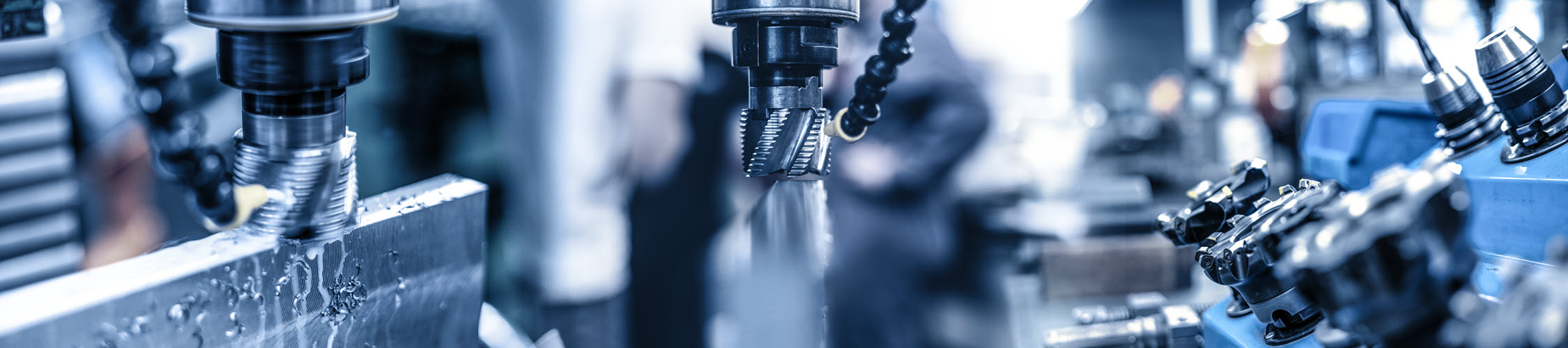
4. 5-Axis Simultaneous CNC Milling & Live-Tool Turning
Process Overview: Advanced multi-axis machining centers manipulate the cutting tool and workpiece across five linear and rotational axes simultaneously, accessing intricate features in a single, unified setup.
Key Visual Takeaway: See how "Done-in-One" machining eliminates manual re-fixturing errors, holding sub-micron dimensional tolerances (± 0.0002") and true position alignment across complex 3D profiles.
Best For: Finishing near-net-shape castings, cutting high-density Duplex 2507 impellers, and machining micro-channel liquid cooling cold plates.
5. Automated Sand Molding (Green Sand vs. Resin No-Bake)
Process Overview: Automated molding machines compress high-purity sand and binder around a reusable pattern. Internal sand cores are set to form hollow internal fluid passages before liquid iron or steel is poured.
Key Visual Takeaway: Compare the high-speed cycle times of automated Green Sand molding (ideal for high-volume automotive parts) with the structural rigidity of Chemically Bonded Resin Sand (ideal for multi-ton heavy machinery castings).
Best For: Large-scale ductile iron engine blocks, pump volutes, agricultural frame brackets, and wind turbine hubs.